by Duluth Guest » August 31, 2023, 11:26 am
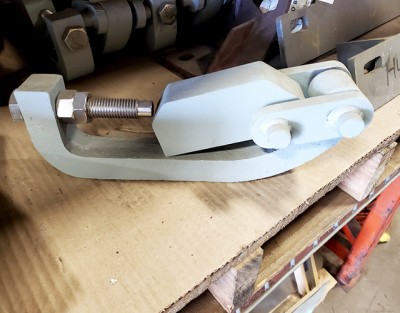
Personal opinion, having been a deckhand and operating these types of clamps peronsally, I was not suprised even in the least bit that undamaged clamps were found in the open position and It has absolutely nothing to do with the negligence of the crew. Before I go into why I wasn't suprised, let me explain how these clamps work. They clamps are called Kestner Hatch dogs or Kestner Hatch Clamps. They received a patent for these and the associated hatch cover design in 1952 but were prevalent in the years prior. The design relies on a concept called over-centering also known as toggling: pivot points and radi are designed such that when all of them are in-line (centered) they are not in a neutral stress state. The pivots place a portion of the clamp in tension and it naturally wants to rotate upon those points to get beyond that point of tension (over the center). By that design, the clamp must be tightened before it can be loosened, un-dogged or toggled open. Deckhands do this, tighten and loosen them over-center, by means of a big forked lever ( see photo attached). The photo attached, by the way, is from the Herbert C. Jackon whose deck design is identical to the Fitzgerald.
So why then, should we not be suprised that clamps are undamaged if they have to be tightened before they can be removed. First of all, the clamps themselves are quite robust. Everything about them is heavy. You would be surprised by their construction should you have one in hand. I visited Fraser Shipyards years ago and was given one. At the time, I was working at a local manufacturing firm and we were contemplating using them as a clamping means for some tooling that we were using. They ended up being far too large for our purposes. The simple design, robust materials and the numbers used, make them difficult to break when securing a hatch. They are, far more durable than the hatch combing and the hatch itself. This leads me to the second point: the deformation of the combings and/or the hatches could have led these clamps to release. The center of gravity of these clamps is such that once they are untoggled and the adjustment bolt is out of it's pocket, they pivot open and drop down against the combing ( see attached image again). If the hatch is off, then by design, these clamps will hang open against the combing. The end of the adjustment bolt within the little pocket on the hatch is one of the 3 hinge points that create the over-centering. Move any one of them, and the pivot radius changes altering the tension of the system and how these clamps toggle. Considering the degree ot damage done to the deck, combings and hatches ( are there any of them that are still in place?), it'd be naive to make the assumption that the geometry of these clamps, required for them too stay toggled, wasn't changed dramatically. Lastly, I will say that because these are adjustable, there are varying degrees of tension required to toggle them. You need the fork to toggle them all but some latch on easy whereas others, you need to stand on the lever to get them to clank into position. The ship's Bos'n controls how they're tensioned. Deckhands like it when they're a little loose; you can go faster when you latch and unlatch the hatches and when I worked, yes, every one was dogged down, always. The adjustment bolt regulates the tension ( it increases or decreases the radius of that pivot point) and it's jam nut secures it in place. Vessels vibrate and flex though and they can loosen which is why most newer Kestner clamps have two jam nuts ( one to set the adjustment and the other to set the jam nut ( see other attached image). By this account, I feel it would be a safe assumption that some of the clamps were likely not as tight as the design intended them to be.
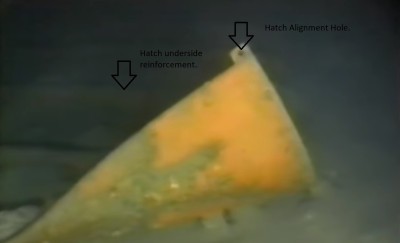
I truly believe that the undamaged hatch clamps don't truly tell you very much at all. It's just an observation from which no conclusions can be drawn. The same goes for the hatch that is bent inwards suggesting that it caved in. I have that photo and only a very small corner of the hatch can be seen but it is indeed bent inwards. The rest of the hatch is laying within the cargo hold and cannot be seen. This, again, is an observation only and no conclusions can be drawn from it. About all that you can say is that the corner of that particular hatch is bent upwards.
Just my $0.02 is all.
- Attachments
-
-
-

Personal opinion, having been a deckhand and operating these types of clamps peronsally, I was not suprised even in the least bit that undamaged clamps were found in the open position and It has absolutely nothing to do with the negligence of the crew. Before I go into why I wasn't suprised, let me explain how these clamps work. They clamps are called Kestner Hatch dogs or Kestner Hatch Clamps. They received a patent for these and the associated hatch cover design in 1952 but were prevalent in the years prior. The design relies on a concept called over-centering also known as toggling: pivot points and radi are designed such that when all of them are in-line (centered) they are not in a neutral stress state. The pivots place a portion of the clamp in tension and it naturally wants to rotate upon those points to get beyond that point of tension (over the center). By that design, the clamp must be tightened before it can be loosened, un-dogged or toggled open. Deckhands do this, tighten and loosen them over-center, by means of a big forked lever ( see photo attached). The photo attached, by the way, is from the Herbert C. Jackon whose deck design is identical to the Fitzgerald.
So why then, should we not be suprised that clamps are undamaged if they have to be tightened before they can be removed. First of all, the clamps themselves are quite robust. Everything about them is heavy. You would be surprised by their construction should you have one in hand. I visited Fraser Shipyards years ago and was given one. At the time, I was working at a local manufacturing firm and we were contemplating using them as a clamping means for some tooling that we were using. They ended up being far too large for our purposes. The simple design, robust materials and the numbers used, make them difficult to break when securing a hatch. They are, far more durable than the hatch combing and the hatch itself. This leads me to the second point: the deformation of the combings and/or the hatches could have led these clamps to release. The center of gravity of these clamps is such that once they are untoggled and the adjustment bolt is out of it's pocket, they pivot open and drop down against the combing ( see attached image again). If the hatch is off, then by design, these clamps will hang open against the combing. The end of the adjustment bolt within the little pocket on the hatch is one of the 3 hinge points that create the over-centering. Move any one of them, and the pivot radius changes altering the tension of the system and how these clamps toggle. Considering the degree ot damage done to the deck, combings and hatches ( are there any of them that are still in place?), it'd be naive to make the assumption that the geometry of these clamps, required for them too stay toggled, wasn't changed dramatically. Lastly, I will say that because these are adjustable, there are varying degrees of tension required to toggle them. You need the fork to toggle them all but some latch on easy whereas others, you need to stand on the lever to get them to clank into position. The ship's Bos'n controls how they're tensioned. Deckhands like it when they're a little loose; you can go faster when you latch and unlatch the hatches and when I worked, yes, every one was dogged down, always. The adjustment bolt regulates the tension ( it increases or decreases the radius of that pivot point) and it's jam nut secures it in place. Vessels vibrate and flex though and they can loosen which is why most newer Kestner clamps have two jam nuts ( one to set the adjustment and the other to set the jam nut ( see other attached image). By this account, I feel it would be a safe assumption that some of the clamps were likely not as tight as the design intended them to be.
I truly believe that the undamaged hatch clamps don't truly tell you very much at all. It's just an observation from which no conclusions can be drawn. The same goes for the hatch that is bent inwards suggesting that it caved in. I have that photo and only a very small corner of the hatch can be seen but it is indeed bent inwards. The rest of the hatch is laying within the cargo hold and cannot be seen. This, again, is an observation only and no conclusions can be drawn from it. About all that you can say is that the corner of that particular hatch is bent upwards.
Just my $0.02 is all.